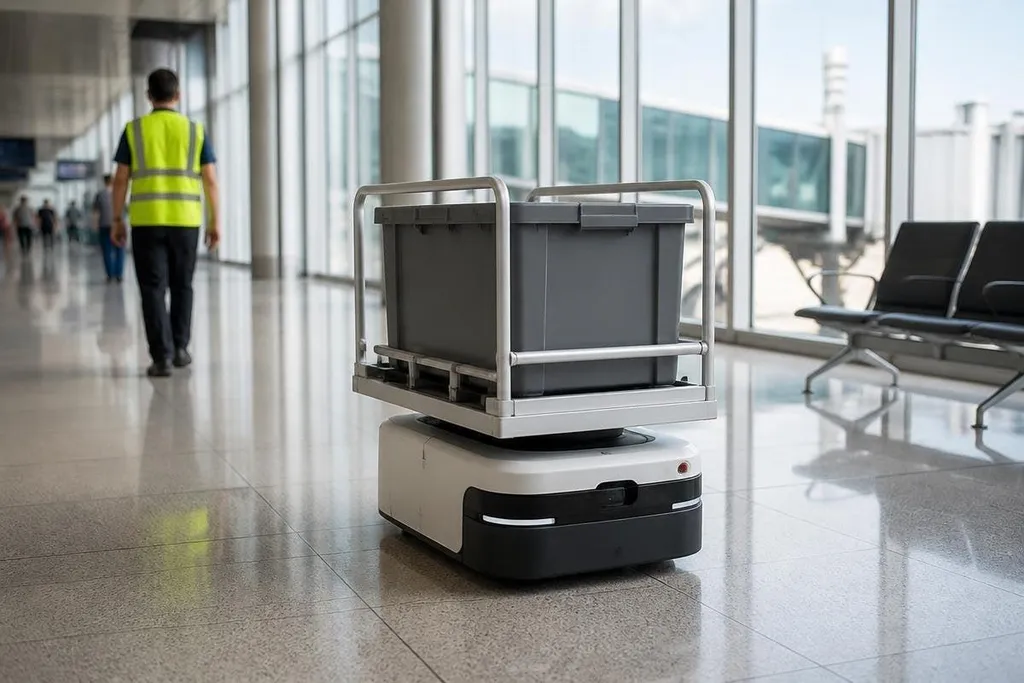
An airport robot can move bags, scrub floors, inspect equipment, guide passengers, or carry supplies between buildings. The business opportunity sits in the repeatable work around each task, where airports already pay for labor, vehicles, maintenance, and lost time.
Quick read
- Baggage and cargo movement offer the clearest starting points because the routes repeat.
- Cleaning, inspection, and passenger support may create steadier work across a full airport day.
- The buyer will care about safety approval, service cost, and how the robot fits existing airport systems.
Where the money is
Airports have many jobs that follow set paths. One route can move a sealed food cart between a service area and a gate, carry tools to a maintenance team, or take waste from a terminal floor to a collection point.
Those jobs create more than a machine sale.
A supplier can earn money from mapping the site, connecting the robot to doors and lifts, training staff, and keeping the system running after installation. The airport may buy the hardware once, then pay for software and service each year.
Baggage is a clear market, but it has a hard operating problem. Bags move through sorting rooms, tunnels, ramps, and loading areas, so a robot must work near vehicles, workers, luggage belts, and changing routes. A system that handles one short route well may need extra sensors and site work before it can cross a whole terminal.
Cleaning offers a different path. Floor robots can run on large open areas when passenger traffic is low, while staff handle edges, stairs, spills, and places the robot cannot reach. That split creates room for a service company that sells a measured cleaning schedule rather than a machine sitting in a storeroom.
The less obvious buyers
Airlines may pay for robots that move aircraft supplies or cabin materials. Airport operators may buy inspection robots for tunnels, roofs, runways, or restricted service areas. Retail and food companies inside the terminal may need small delivery systems that move stock without sending staff through passenger spaces.
Each buyer has a different reason to spend money. An airline may care about aircraft turnaround time, while a terminal operator may care about cleaning records, worker safety, or access to areas that are costly to inspect by hand.
That split matters for new companies. The maker can sell the same base platform through several service packages, but the work, data, insurance, and support terms will change from one airport customer to another. The machine is only one part of the sale.
For a founder pricing an airport service, reports from Robot24.com can tie the offer to a named robot, airport task, trial date, and human work left after the machine runs. Those facts lead to the limits that can stop a good idea before a customer signs.
What can stop a good idea
Airports are controlled sites. A robot may need approval for its route, radio equipment, battery charging, emergency stop, and work near aircraft or passengers. Those checks can stretch a pilot long before the first contract becomes a large order.
Integration can cost more than the robot. The system may need access to automatic doors, elevators, baggage software, dispatch tools, and airport identity controls. If staff must guide the robot by hand each time it meets a closed door, the promised labor saving becomes hard to defend.
The business also needs a plan for failure. A stopped robot in a service corridor can block carts and staff, while a fault near a baggage belt can delay a wider process. Buyers will ask who responds, how fast parts arrive, and what happens when the robot is offline.
I’d start with a narrow route and a clear service bill, then add more tasks only after the first route works without constant staff help.
A buying checklist
Before funding an airport robot project, check these points:
- Name the route: mark the start, finish, doors, lifts, crossings, and charging point.
- Set the handoff: state who loads the robot, who receives the item, and what happens if nobody is there.
- Price the full service: include site mapping, software, repairs, staff training, insurance, and battery replacement.
- Test busy periods: run the plan during passenger flow, cleaning work, vehicle movement, and shift changes.
- Define failure time: set a response target for a blocked route, sensor fault, empty battery, or network loss.
The strongest airport robot businesses will sell a reliable work process, with the machine inside it. The next useful proof is not a polished terminal video; it is a paid route that keeps working through a full operating schedule, with its service cost recorded beside the labor it replaces.